
PartnerStack | AppDirect
Business Focus
PartnerStack: Building the Infrastructure for Partner-Led Growth
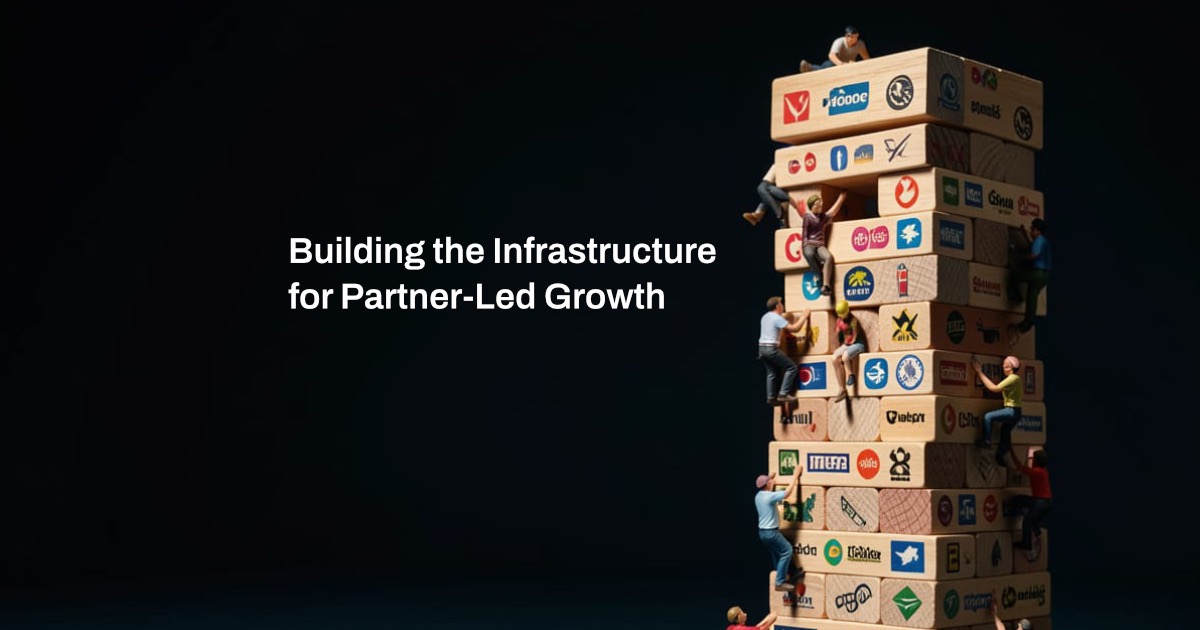
Instead of treating partnerships as an afterthought, PartnerStack positioned them as a primary revenue engine—a system where affiliates, agencies, influencers, and resellers become an extension of a company’s sales force.

Partnerstack & AppDirect
Table of Contents
PartnerStack didn’t emerge to compete with traditional marketing channels—it quietly rewired them.
The Premise: Growth Beyond Ads
Founded in 2015 (originally as GrowSumo), PartnerStack entered a SaaS ecosystem heavily reliant on paid acquisition, outbound sales, and fragmented affiliate tools. Its core thesis was simple but disruptive:
Growth should come from trusted relationships, not just paid reach.
Instead of treating partnerships as an afterthought, PartnerStack positioned them as a primary revenue engine—a system where affiliates, agencies, influencers, and resellers become an extension of a company’s sales force. This wasn’t just tooling. It was a shift in go-to-market philosophy.
What PartnerStack Built
At its core, PartnerStack developed a Partner Relationship Management (PRM) platform designed for SaaS and B2B companies.
It unified what had historically been scattered across spreadsheets, disconnected affiliate tools, and manual processes into one system:
- Partner recruitment and onboarding
- Referral and affiliate tracking
- Commission automation and payouts
- Performance analytics and attribution
- Marketplace exposure to active B2B partners
Over time, this evolved into one of the largest ecosystems of its kind, with over 138,000 B2B partners driving revenue across SaaS categories.
The result? PartnerStack wasn’t just software—it became infrastructure for indirect revenue.
Market Timing: When Distribution Became the Product
For years, product quality dominated SaaS competition.
Then the market shifted.
- Software supply exploded, accelerated by AI
- Customer acquisition costs increased
- Buyers began relying on trusted recommendations before engaging sales
By the mid-2020s, distribution—not product—became the decisive advantage.
Data points reinforced the shift:
- 81% of B2B buyers have a preferred vendor before speaking to sales (AppDirect)
- A growing majority of purchases flow through indirect channels such as partners and marketplaces (Affiverse)
PartnerStack was built for exactly this environment.
It enabled companies to embed themselves into the decision-making layer, where partners influence discovery, validation, and purchase.
Business Impact: From Tool to Growth Engine
PartnerStack’s model proved commercially viable at scale:
- Its partner network has driven over $3 billion in customer revenue (BetaKit)
- It gained significant traction among SaaS companies needing recurring, partner-driven revenue streams
- It established itself as a category leader in PRM, with meaningful market share and thousands of customers (TNW | The heart of tech)
More importantly, it validated a broader idea:
Partner ecosystems are not support channels—
they are distribution systems.
The Strategic Convergence: PartnerStack Joins AppDirect
In April 2026, PartnerStack entered its next chapter by joining AppDirect. This was not framed as an exit—but as a convergence.
From PartnerStack’s own announcement:
“We’ve always been solving the same problem from different directions… this is those two roads finally meeting.”
What Each Side Brought
PartnerStack
- Deep partner ecosystem infrastructure
- PRM capabilities
- A large network of affiliates, influencers, and channel partners
AppDirect
- Subscription commerce platform
- Marketplace infrastructure
- Advisor network and billing systems
Together, they form a unified system designed to control the entire distribution lifecycle.
The Combined Vision: A Unified B2B Distribution Engine
The acquisition enables a single platform where companies can:
- Manage partner ecosystems
- Sell through marketplaces (including cloud hyperscalers)
- Handle subscriptions and billing
- Reach buyers through advisors and indirect channels
AppDirect describes this as a “unified subscription commerce platform for partner-led growth.”
Or more bluntly:
One system to get found, get chosen,
and get paid in modern B2B markets.
Why This Move Matters
This isn’t just consolidation—it’s positioning. The combined platform addresses a structural shift:
- AI is changing how buyers discover software
- Marketplaces are becoming primary transaction hubs
- Partners are shaping pre-sales decisions
By integrating PartnerStack, AppDirect effectively closes the loop between:
Discovery → Influence → Transaction → Revenue
Instead of companies stitching together multiple tools, the new model offers a single operating system for distribution.
What It Means for Businesses
For companies using PartnerStack:
- No immediate disruption to existing programs
- Expanded access to AppDirect’s ecosystem of:
- 14,000+ advisors
- 2,000+ providers
- New routes to market and increased discoverability (partnerstack.com)
For partners:
- Broader earning opportunities across new categories
- Access to a wider catalog beyond SaaS
- Continued use of the same platform with expanded reach (partnerstack.com)
Closing Perspective
PartnerStack began as a contrarian bet:
That people—not platforms—drive growth.
A decade later, that idea has matured into infrastructure powering billions in revenue—and now plugs into a larger machine built to dominate B2B distribution.
If the past era was about building products, this one is about controlling how those products are discovered and sold. PartnerStack didn’t just adapt to that shift. It helped define it.
Their comprehensive suite of professionals caters to a diverse team, ranging from seasoned architects to renowned engineers.

How to Partner b2b
Persona Intelligence
Critical Thinking
Print-on-Demand
FAQs
1. What is PartnerStack?
PartnerStack is a Partner Relationship Management (PRM) platform built primarily for SaaS and B2B companies. It enables businesses to recruit, manage, and scale partnerships across affiliates, agencies, and resellers.
Instead of relying solely on ads or direct sales, companies use PartnerStack to turn external partners into revenue-generating channels.
2. What does “partner-led growth” actually mean?
Partner-led growth is a go-to-market strategy where third parties help drive customer acquisition, influence buying decisions, and generate revenue.
These partners can include:
- Affiliates
- Influencers
- Consultants
- Agencies
- Resellers
Rather than owning the entire sales journey, companies distribute it across trusted networks.
3. How is PartnerStack different from traditional affiliate platforms?
Traditional affiliate tools are typically:
- Transaction-focused
- B2C-oriented
- Limited to link tracking and payouts
PartnerStack expands this into a full ecosystem by offering:
- Structured onboarding systems
- Multi-partner program management
- Recurring commission models (ideal for SaaS)
- Built-in partner marketplace exposure
It’s less about links and more about long-term revenue relationships.
4. What is AppDirect?
AppDirect is a subscription commerce platform that helps businesses sell, distribute, and manage digital services.
It provides:
- Marketplace infrastructure
- Billing and subscription management
- Advisor and reseller networks
In simple terms, it handles the commercial side of software distribution.