

Persona Intelligence
Systematic use of persona-derived insights to guide decisions.
Dynamic, Decision-Driving System: Operationalizing personas as a live input into strategy, product, and marketing decisions.
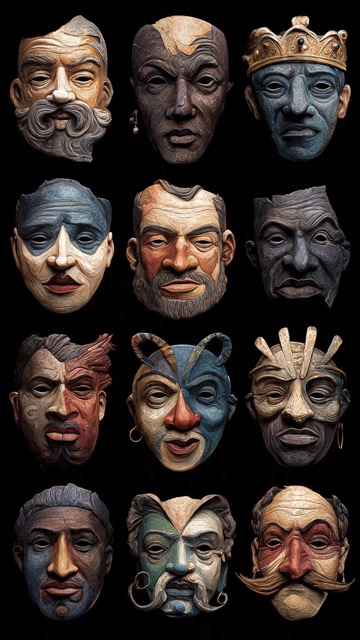
Persona Dossier
A research hub that maps how real people think, choose, and act—across personality, profession, and daily life. Designed for UX and marketing teams who want deeper than demographics.

Creative & Marketing Industry
A library of persona dossiers on realistic individuals in the Creative and Marketing industry.

Project Manager

UX Designer

IT Specialist

Graphic Design Graduate

Featured Persona
Name: Gerrard Spearman
Born: February 1984 (age 42)
Born during a period when home computer popularity emerged as mainstream, and therefore culturally familiar with digital technology.
→ Analysis: As a Xenial, Gerrard experienced the shift from analog to digital during childhood and adolescence. He remembers early PCs, dial‑up internet, and the dot‑com boom. This dual fluency makes him pragmatic: he values reliable, user‑centered design but is not easily seduced by unproven trends.
Medical Health & Wellness
Coming soon: A library of persona dossiers on realistic individuals in the Medical Health and Wellness industry.
As a starting point, these dossiers will map inclinations such as fitness tracking habits, dietary preferences, telehealth usage, and wellness content consumption.

Integrative Wellness Coach

Registered Dietitian (RD)

Dance & Movement Therapist

Physical Therapist & Keep‑Fit Specialist

how it works
if you were born here, and you like this, and you live there, then you are more likely to own one of these…
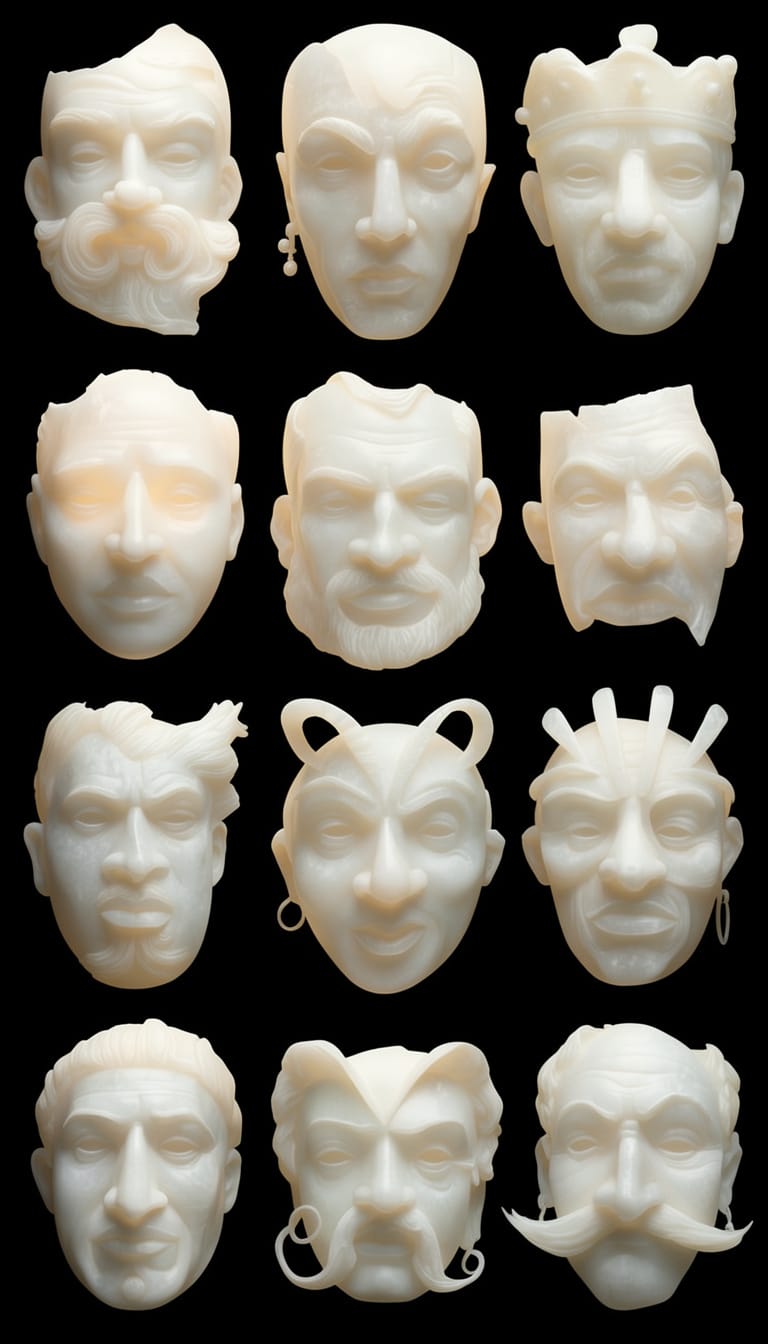
The Origin of “Persona”
To ground Persona Intelligence with clarity, you need to anchor it in the origin and evolution of the term “persona”—because its meaning today is layered and often misunderstood.
The term persona traces back to Latin, where it literally referred to a mask worn by actors in classical theatre. These masks were not just decorative—they signaled:
• the character’s role
• emotional tone
• social identity
In essence, a persona was a constructed identity presented to an audience.
This theatrical concept becomes foundational: a persona is not the full human—it is the interpretable version of that human.
Psychological Foundations
The term “Persona” was formalized in psychology, most notably by Carl Jung.
In Jungian theory:
- The persona is the social self—the version of an individual presented to the world
- It acts as a mediator between the individual and society
- It is shaped by expectations, roles, and environment
Jung’s framing is critical because it introduces two enduring ideas:
- People are contextual and adaptive, not fixed.
- What we observe externally is only a partial expression of internal reality.
This becomes highly relevant when applying personas in business and marketing—because what people say and what they do are often different.
(Expanded)
Psychological Foundations
Jungian Archetypes: Beyond the Persona
While Jung introduced the persona as the social mask presented to the world, he also proposed a deeper layer of the psyche: archetypes – universal, primordial patterns of behavior and motivation that reside in the collective unconscious.
Where the persona is contextual and adaptive, archetypes are innate and transpersonal. They shape narratives, brands, and user expectations across cultures.
Jung identified 12 primary archetypes, each driven by a core desire:
- The Innocent – Optimistic, pure, seeks happiness
- The Sage – Seeks truth, wisdom, and understanding
- The Explorer – Craves freedom, adventure, and discovery
- The Rebel / Outlaw – Desires revolution, change, or disruption
- The Magician – Seeks to understand the universe to make dreams real
- The Hero – Acts courageously to prove worth and overcome challenges
- The Lover – Seeks intimacy, connection, and emotional closeness
- The Jester – Lives in the moment with humor, aiming to lighten the world
- The Everyman / Orphan – Desires belonging and connection; seeks equality
- The Caregiver – Motivated by protecting and caring for others
- The Creator – Strives to build things of lasting, enduring value
- The Ruler – Desires control, stability, and structure
These archetypes are often grouped by their primary motivation:
| Core Drive | Archetypes |
|---|---|
| Ego (to leave a mark) | Innocent, Everyman, Hero, Caregiver |
| Freedom (to seek paradise) | Explorer, Rebel, Creator |
| Social (to connect) | Lover, Jester, Everyman |
| Order (to provide structure) | Creator, Ruler, Magician |
Why this matters for Persona Intelligence:
While personas capture observable, contextual behaviors, archetypes reveal deep, often unconscious motivations. The most powerful user models blend both: a persona tells you what someone does and why in context; an archetype tells you what fundamentally drives them across situations.
Persona Shift to Design with Alan Cooper
⬇

how it works
it seeks truth for understanding…
The Shift into Design and Marketing & Alan Cooper
The modern, practical use of personas emerged in product design and user experience, particularly through the work of Alan Cooper in the 1990s.
Cooper introduced personas as:
fictional yet evidence-based archetypes representing key user types
His goal was simple but powerful:
- prevent teams from designing for “everyone”
- instead, design for specific, well-understood users
From there, personas became standard across:
- UX design
- marketing strategy
- product development
The concept of personas, now foundational to modern design and marketing systems, can be traced back to the work of Alan Cooper—a pioneering American software designer widely regarded as the “Father of Visual Basic.” While his technical contributions are significant, his lasting influence lies in reshaping how digital products are designed: by putting real human behavior at the center of decision-making.
The origin of personas wasn’t born in a lab or formal framework—it emerged from a practical problem. In the early 1980s, while developing a project management application, Cooper sought a way to better understand the people who would ultimately use his software. During long walks near his office, he began simulating conversations with a fictional user named “Kathy,” a character grounded in real-world observations and user research.
This exercise wasn’t about storytelling for its own sake. It was a deliberate attempt to step outside the engineer’s mindset and evaluate decisions from the user’s perspective. By mentally “inhabiting” this persona, Cooper was able to transform vague assumptions into tangible insights, prioritizing features based on real user needs rather than technical preference.
He later formalized this approach in his 1998 book, The Inmates Are Running the Asylum, where he introduced personas as a core component of his Goal-Directed Design methodology. This framework emphasizes designing products around user goals—ensuring that functionality serves purpose, not just possibility.
The influence of this thinking has been substantial. Today, personas are embedded across user experience (UX), product development, and marketing strategy. From global technology firms to independent creators, they are used to align teams, guide decision-making, and ensure that human needs—not internal assumptions—drive outcomes.
Within a modern Persona Intelligence framework, this evolution goes one step further. Personas are no longer static profiles; they function as dynamic, data-informed systems that continuously shape content, product, and communication strategies in real time.
This table distills how personas were originally intended to be used—practically, not superficially.
| Function | Description | Practical Application | Common Mistake Today |
|---|---|---|---|
| User Representation | Personas act as stand-ins for real users | Referenced in every design decision (“Would Kathy use this?”) | Treated as fictional profiles with no real influence |
| Goal Alignment | Focus on what users want to achieve | Features are prioritized based on user goals | Focus placed on features instead of outcomes |
| Decision Filter | Helps teams resolve ambiguity | Used to validate or reject product ideas | Ignored during actual decision-making |
| Empathy Tool | Forces designers to think from the user’s perspective | Encourages human-centered thinking in technical teams | Reduced to surface-level demographics |
| Communication Tool | Aligns teams around a shared understanding | Used across design, marketing, and product teams | Siloed within UX or documentation |
| Feature Prioritization | Ensures only relevant functionality is built | Prevents feature bloat and complexity | Everything gets built “just in case” |
| Scenario Simulation | Enables “what-if” user interaction thinking | Walkthroughs of how personas use a product | Rarely used beyond initial workshops |
Table: Alan Cooper’s Use of Personas (Goal-Directed Design)
We work with and use products made by some of the best companies.